

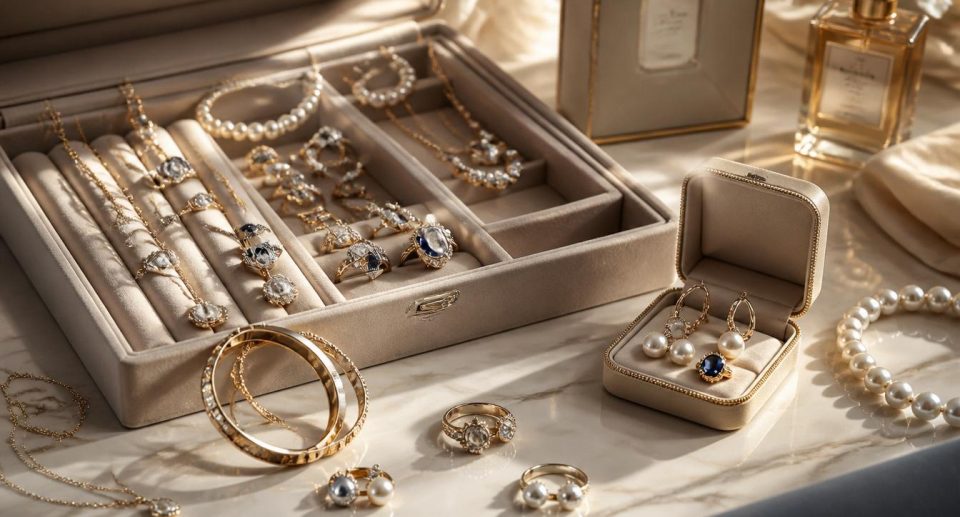
Fine jewelry and fashion pieces represent both financial investment and sentimental value. Whether you own heirloom gold rings, delicate sterling silver chains, or trendy brass statement earrings, improper storage can destroy your favorite accessories faster than regular wear and tear. Left exposed to air, humidity, and direct sunlight, metals tarnish, gemstones scratch, and thin chains tie themselves into frustrating, microscopic knots. Developing a thoughtful jewelry storage routine preserves the finish, prevents structural damage, and ensures your collection remains ready to wear at a moment notice.
Understanding the Primary Enemies of Jewelry
Before establishing a storage system, you must understand what causes jewelry degradation in the first place. Metals and gems do not deteriorate purely from age; environmental factors accelerate chemical reactions and physical damage.
Moisture and Humidity
Humidity is the leading cause of tarnish, particularly for silver and base metals. When airborne moisture combines with sulfur compounds in the air, a chemical reaction occurs that creates a dark, dull surface layer on your metal pieces. Bathrooms and basements are the worst environments for jewelry storage because frequent steam and high humidity levels speed up this oxidation process.
Air Exposure and Oxidation
Oxygen in the air reacts continuously with exposed metal surfaces. While solid gold rarely tarnishes because of its purity, sterling silver, copper, brass, and even gold plated items will darken over time when left sitting out on an open tray or dressing table vanity.
Friction and Scratching
Gemstones possess varying levels of hardness on the Mohs scale. A diamond can easily scratch gold, pearls, or softer stones like opal and turquoise if pieces are tossed together loosely into a single drawer or pouch. Chains rubbing against heavy pendants create micro scratches that dull the polished shine of your precious metals.
Best Practices for Preventing Tarnish on Metals
Protecting your metals from discoloration requires controlling their immediate environment and limiting exposure to reactive elements.
Utilize Anti Tarnish Strips and Bags
Small anti tarnish tabs absorb airborne pollutants and moisture before they can react with your jewelry.
-
Insert tabs into boxes: Place a small paper anti tarnish tab inside every individual pouch, jewelry box compartment, or storage drawer.
-
Use zip top bags: For silver pieces that you do not wear daily, seal them inside small polyethylene zip top bags after squeezing out excess air. This creates an airtight barrier against sulfur and oxygen.
Keep Out of Bathrooms
Many people store their daily wear rings and earrings on a dish next to the bathroom sink for convenience. However, hot showers, curling irons, and humidity make bathrooms a hostile environment for metal preservation. Move your primary jewelry storage to a dry bedroom or walk in closet.
Preventing Tangling for Chains and Necklaces
Untangling a delicate gold or silver chain is a tedious task that often ends in snapped links. Proper hanging and separation techniques eliminate this issue entirely.
Hang Necklaces Individually
Vertical storage is the absolute best way to keep chains free of knots.
-
Install wall mounted hooks: A row of small hooks or a decorative wall mounted jewelry tree allows each necklace to hang straight down.
-
Ensure adequate spacing: Keep enough distance between individual hooks so that adjacent chains cannot swing and intertwine with one another.
The Drinking Straw Trick for Travel
If you are packing necklaces for a trip and lack a dedicated travel case, use a simple household drinking straw to keep chains straight.
-
Unclasp your necklace.
-
Thread one end of the chain through the interior of a plastic or paper drinking straw.
-
Clasp the necklace back together around the outside of the straw.
-
This prevents the chain from looping back on itself and forming knots inside your luggage.
Proper Storage Solutions for Every Jewelry Type
Different materials require specific storage conditions to maintain their structural integrity and surface finish.
Pearls and Porous Gems
Organic gems like pearls, opals, and turquoise contain natural moisture and are sensitive to harsh environments.
-
Avoid synthetic plastics: Never store pearls in airtight plastic bags because they need to absorb trace amounts of moisture from the air to prevent drying out and cracking.
-
Use soft fabric linings: Store pearls flat in silk, velvet, or linen lined boxes to protect their delicate nacre from friction damage.
Fine Diamonds and Hard Stones
Diamonds, rubies, and sapphires are exceptionally hard, meaning they can easily scratch softer metals and gemstones in your collection.
-
Separate compartments: Keep your diamond rings in dedicated ring slots or individual velvet pouches rather than dropping them into a communal dish with softer pieces.
Daily Habits to Protect Your Collection
Storage begins long before you place your items in a box at the end of the day. Implementing proper removal and cleaning habits extends the life of your collection significantly.
The Last On, First Off Rule
Make it a habit to put your jewelry on after applying lotions, perfumes, hairsprays, and makeup. Chemical residues from beauty products build up on metal surfaces and accelerate tarnish. At the end of the day, remove your jewelry first before changing clothes or washing your face.
Wipe Down After Every Wear
Before putting an item back into storage, take a clean, dry microfiber cloth and gently wipe away skin oils, sweat, and cosmetic residue. This simple ten second habit prevents acidic buildup from eating away at plated finishes and tarnishing sterling silver over time.
Frequently Asked Questions
Can I store all my gold jewelry together in the same box?
Solid gold pieces can generally be stored together because gold is a relatively soft and non reactive metal that does not tarnish easily. However, you should still separate heavy pieces from lightweight chains to prevent the chains from bending or warping under pressure. If your gold items are gold plated rather than solid gold, store them individually to protect the thin outer layer from wearing away due to friction.
What is the best material for lining a jewelry box?
Natural fabrics such as untreated cotton, raw silk, velvet, and linen are the best choices for lining jewelry storage. Avoid cheap synthetic faux leathers or rubberized plastics, as these materials can sometimes off gas chemical fumes that accelerate tarnish and damage delicate metal finishes over time.
How do I store vintage costume jewelry safely without damaging the stones?
Vintage costume pieces often feature glued in rhinestones and base metal settings that are prone to green corrosion called verdigris. Store vintage items in a cool, exceptionally dry environment with individual soft pouches. Keep them completely separate from your fine jewelry so that any chemical breakdown or corrosion from the base metals cannot spread to your precious gold and silver pieces.
Is it safe to store jewelry in sunlight on a dressing table?
Storing jewelry in direct sunlight on an open vanity or windowsill is strongly discouraged. Prolonged exposure to ultraviolet rays and heat can fade colored gemstones like amethyst, topaz, and turquoise, while also drying out organic materials like pearls and leather watch straps. Always choose a shaded drawer, closet shelf, or enclosed jewelry armoire.
How should I store heavy statement earrings so they do not bend?
Heavy statement earrings, particularly those made with intricate wirework or delicate posts, should never be tossed into a deep drawer where heavy items can crush them. Use specialized earring cards, mesh screens, or shallow velvet trays where each pair can rest flat or hang securely without bearing weight from other accessories.
What should I do if my silver jewelry has already started to tarnish in storage?
If you discover tarnish on stored silver, do not panic. Minor tarnish can be easily removed using a specialized jewelry polishing cloth impregnated with anti tarnish agents. For heavier tarnish, use a mild liquid silver dip or a gentle paste made from baking soda and warm water, followed by a thorough rinse and complete drying before returning the item to proper storage.
